
Musicians rely on their hearing every day, from personal practice at home to performing on stage. In a world that is becoming increasingly noisy, music further contributes to your sound exposure. Without protection, repeated exposure can lead to hearing damage, tinnitus, and difficulty picking out subtle musical details, as well as impacting how you hear speech. Using the right hearing protection is essential to preserve your hearing while still enjoying music fully.
Why Hearing Protection is Needed
Even short periods of loud music can impact your ears, as there is an inverse relationship between safe exposure times and sound levels (the louder the sound, the shorter the time you can be safely exposed). Over time, this can cause permanent damage to your hair cells, which are responsible for transmitting sound to the brain. Musicians are particularly at risk because they are often exposed to sustained high decibel levels during rehearsals, performances, or studio sessions. Hearing protection helps reduce this risk while allowing you to hear music clearly. Essentially, hearing protection reduces the exposure level to allow you to listen safely for longer.

Giving Your Brain Time to Adjust
When you’re new to hearing protection, it takes some getting used to. Your brain needs time to acclimatise to the reduced attenuation, which can feel different at first. In an ideal situation, you should use the hearing protection for the full duration that you could be exposed to unsafe sound levels, but if you’re struggling to get used to them, you can start by using it during shorter practice sessions and gradually increase the duration. With regular use, you will notice that music remains clear and balanced, and your ears feel less fatigued.
Different Filter Levels for Different Situations
Music has such a wide range of genres to enjoy. Some instruments and ensembles are louder than others, meaning that there isn’t a one-size-fits-all option for attenuation. Different hearing protection filter levels can help you hear accurately while protecting your hearing and not reducing attenuation more than required. For example, a drummer or guitarist may need higher attenuation than a classical violinist during practice. Musicians can choose filters that reduce volume evenly across frequencies, keeping the tonal balance intact while lowering overall sound levels.
Off-the-Shelf Earplug Options
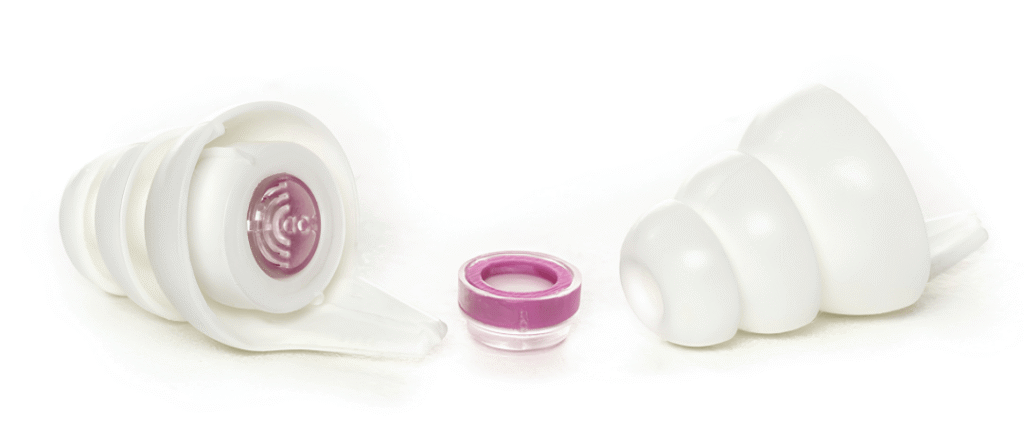
Nearly everyone will have experience of the small fluorescent foam earplugs which are great for industrial noise, but typically block too much out for use with music. So, it’s a relief to know there are many ready-to-use earplugs designed for musicians, such as ACS Pacato and Alpine Music Safe Pro. These are convenient and affordable, offering moderate protection with minimal impact on sound quality. They are a good option for when you need hearing protection quickly. Many models use a flat attenuation design to preserve the natural tone of music while reducing volume.
Upgrading to Custom Moulds
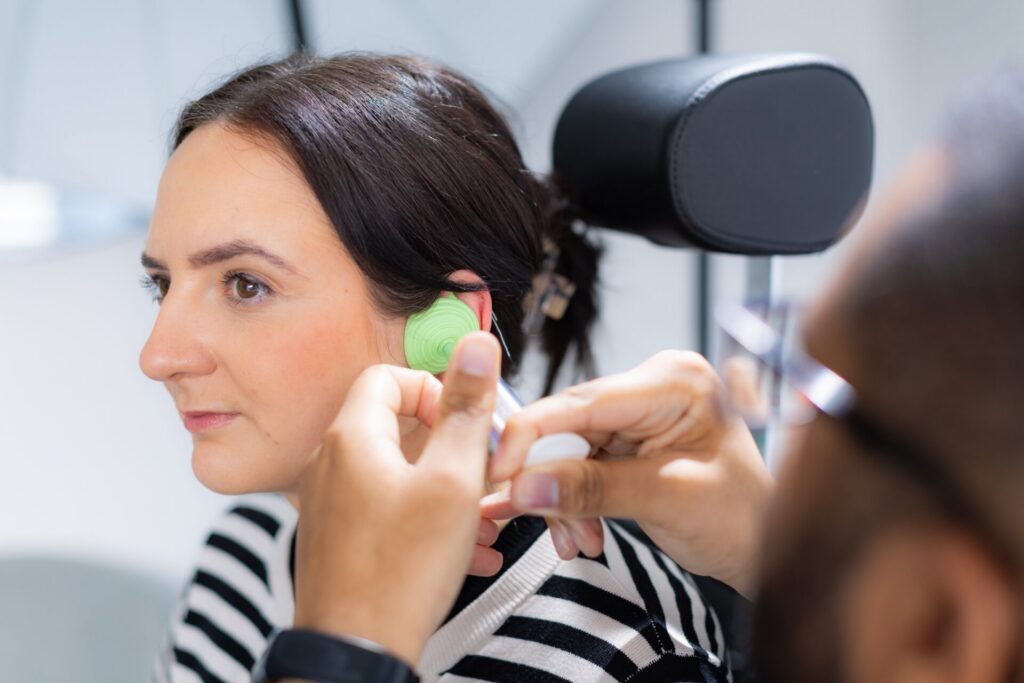
For musicians who are searching for the greatest clarity with music, custom-moulded earplugs are the best choice. These are made from impressions of your ears, ensuring a perfect fit and superior comfort. Custom options often come with the ability to interchange filters for different noise levels or situations, making them versatile for studio work, live performance, and practice sessions. They provide consistent protection and preserve the full detail of music across all frequencies due to their flat attenuation.
Choosing the Right Hearing Protection
Selecting the right hearing protection depends on your instrument, typical sound levels, and how often you perform or rehearse. While off-the-shelf earplugs are a great start, custom-moulded options offer the best long-term protection and sound fidelity. Speak to an audiologist who understands the needs of musicians. They can help you choose the right type of protection, fit it correctly, and advise on filter options so you can enjoy music safely for years to come.
If you are a musician looking for guidance on hearing protection, contact us. Our team of experienced audiologists can help you find the right solution to protect your hearing while keeping your music clear and vibrant.


