
For musicians, sound is everything. But being around high volumes day in, day out can take its toll.
Tinnitus is one of the most common hearing concerns among musicians. It’s often described as ringing, buzzing or a high-pitched tone in the ears. For many, it starts small. You notice it after a gig or rehearsal, then it fades. Over time, it can begin to last longer or become more noticeable.
At Musicians’ Hearing Services, this is something we see every day. The difference is often down to timing. Those who act early are far more likely to reduce their risk of long-term problems.
What is tinnitus?
Tinnitus is when you hear sound that isn’t coming from anything around you.
It can come and go, or become more constant over time. While it is not a condition in itself, it is usually a sign that your hearing system is under strain, most often from repeated noise exposure.

Why musicians are more at risk
Loud environments are part of the job
Rehearsals, performances and studio sessions regularly go above safe listening levels. It is not just about how loud it is in the moment. It is the build-up over time that matters.
You are close to the sound
Standing near amps, drum kits or monitors means the sound is hitting your ears directly and consistently.
Hearing protection is often inconsistent
Many musicians avoid standard earplugs because they affect sound quality. That often leads to wearing them some of the time, or not at all.
Early signs get ignored
Ringing after a gig is easy to brush off. But it is one of the clearest signs your ears are under strain. If it keeps happening, it can lead to longer-term changes.
There is pressure to push through
Long sessions and loud environments are often seen as normal. Hearing health tends to fall down the priority list until symptoms become harder to ignore.
How to reduce your risk of tinnitus
You do not need to make drastic changes. It is about small habits done consistently.
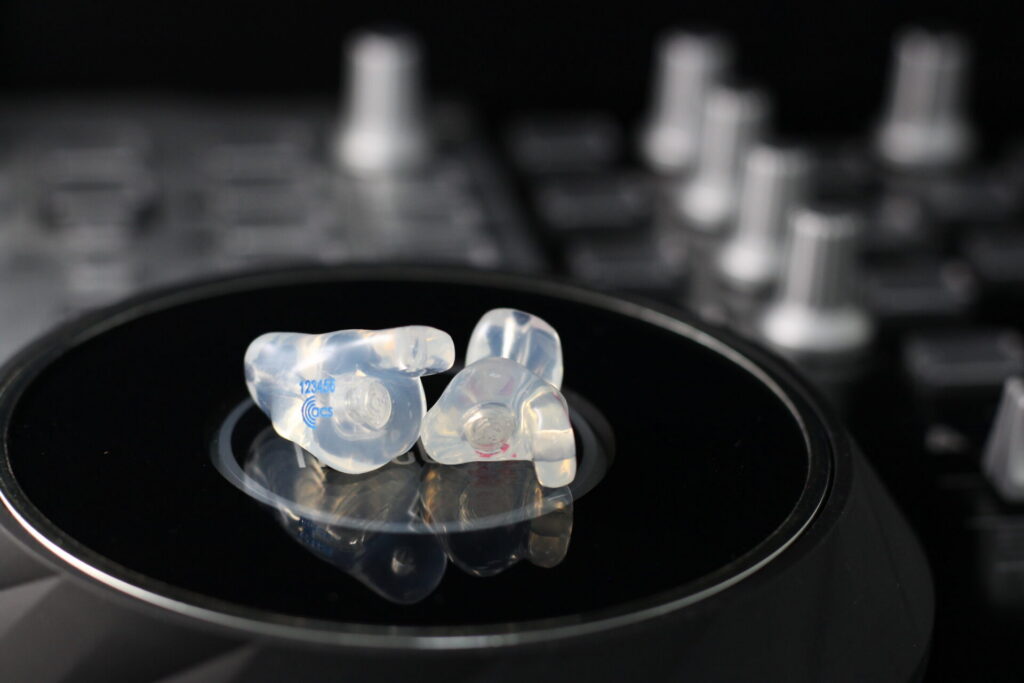
- Use musician earplugs – Custom earplugs lower the volume without distorting the sound. You still hear clearly, just at a safer level.
- Give your ears a break – Step away from the noise when you can. Even short breaks help your ears recover.
- Pay attention to changes – If you notice ringing, muffled hearing or sensitivity to sound, do not ignore it. These are early warning signs.
- Adjust your setup – Small changes can make a real difference. Move speakers where possible, manage monitor levels and avoid unnecessary exposure.
- Get your hearing checked – Regular hearing tests help pick up changes early, often before they become more serious. For musicians, this should be part of routine care.
- Act early to stay in control – Tinnitus is common among musicians, but it is not something you have to accept as inevitable. With the right approach, you can reduce your risk and keep performing with confidence.
If you are noticing ringing or any changes in your hearing, it is worth getting it checked early.
Book an appointment
Our team at Musicians’ Hearing Services offers specialist support for musicians, from hearing consultations and tinnitus management, to tailored hearing protection.
Book your appointment today and stay in control of your hearing – contact us.


